
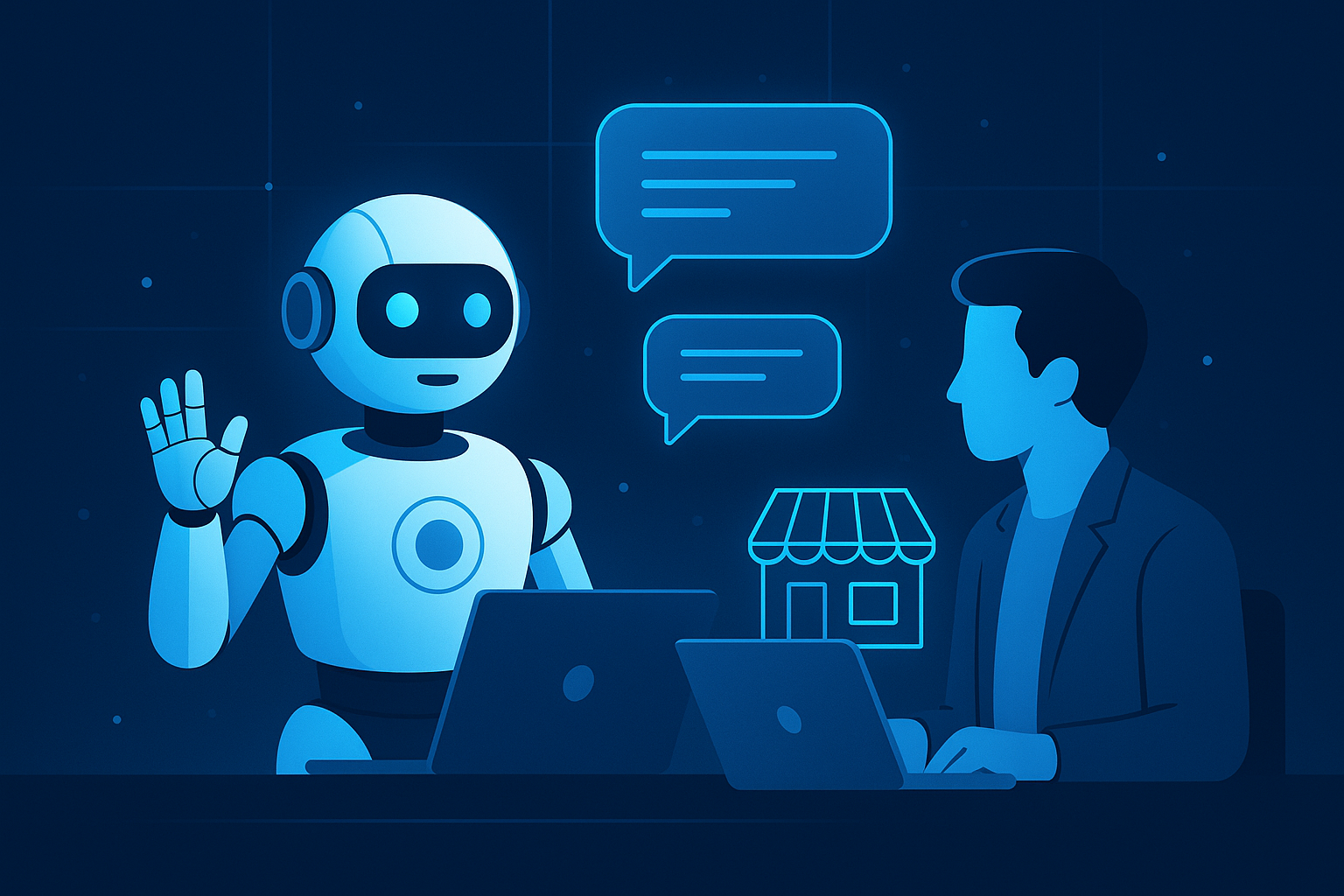
AI chatbots have transformed how small businesses operate, providing a way to efficiently handle tasks that once required human intervention. Whether it’s customer service, sales, or internal communications, chatbots are proving indispensable. But with so many options available, which ones are truly worth considering in 2026? This article will explore the best AI chatbots for small businesses, breaking down their features, pricing, and what makes each one stand out.
ChatGPT — The All-Rounder That Keeps Improving
ChatGPT has been making waves for a while now, and for good reason. It’s not just about responding to queries; it’s about understanding context and providing meaningful interactions. This capability makes ChatGPT ideal for small businesses looking to enhance customer engagement.
Natural language processing that understands context.
Customizable responses tailored to your business needs.
Integration with various platforms like Slack and Microsoft Teams.
Continuously learning from interactions to improve over time.
Affordable pricing plans to suit small business budgets.
ChatGPT shines in its ability to learn and adapt. Its deep learning capabilities mean it doesn’t just spit out pre-programmed responses; it understands the nuances of human language. Imagine a customer asking about a product feature, and ChatGPT not only answers correctly but also upsells related products. That’s the kind of engagement that can boost sales.
Where ChatGPT could use improvement is in its setup complexity. Some users find the initial configuration a bit daunting, but with a plethora of tutorials available, this is a manageable hurdle. Pricing starts around $20/month, making it accessible for small businesses.

ChatGPT is always learning. It’s like having an employee who never stops training. That’s a major advantage for small businesses needing versatile support.
Tidio: More Than Just a Chat Interface
Tidio offers more than just a chat interface. It’s a complete communication tool that provides live chat, chatbots, and email marketing all in one place. This makes it a fantastic option for small businesses that want to centralize their customer interaction strategies.
Live chat seamlessly integrated with AI chatbot capabilities.
Customizable templates to match your brand’s voice.
Automated email marketing integration.
Multi-language support for global reach.
Analytics to track customer engagement and chatbot performance.
Tidio stands out with its user-friendly interface and powerful integrations. You don’t need a tech background to get started, which is a boon for small business owners focused on operations rather than IT. It starts at $18/month, offering a competitive edge in price.
One area where Tidio could improve is in its AI’s conversational depth. While it’s great at handling straightforward queries, it sometimes struggles with more complex interactions. Nonetheless, for businesses looking to combine customer support with marketing efforts, it’s a solid choice.
Try Tidio if you’re after a tool that brings your chat and email marketing under one roof. It’s like having a Swiss Army knife for communication.
Meya: The Customization King
For those who want total control over their chatbot’s behavior, Meya offers extensive customization options. It’s a platform that allows businesses to design their chatbots precisely for their specific needs.
Highly customizable workflows and responses.
Integration with major CRM systems and platforms.
Advanced AI capabilities for complex interactions.
Options for voice interactions alongside text-based chats.
Scalable solutions for growing businesses.
Meya’s strength lies in its flexibility. Small businesses that require unique chatbot interactions will find this platform invaluable. It’s perfect for those who need their chatbot to perform specific tasks beyond basic customer service.
However, this level of customization can come with a steep learning curve. Businesses might need to invest time in understanding how to best configure their bots. Pricing is on request, which suggests a tailored approach rather than a one-size-fits-all model.
If you’re someone who loves tinkering and tweaking, Meya is your playground. It’s like having a Lego set for building your ideal chatbot.
LiveChat: Perfect for Direct Customer Engagement
LiveChat is another excellent option, especially for businesses that prioritize direct customer interaction. Its strong point is in providing a platform where live agents and AI chatbots can work in harmony.
Real-time live chat with AI support.
Customizable chat widgets to fit any website.
Robust analytics to measure team performance and customer satisfaction.
Seamless integration with over 170 tools like CRM and helpdesk software.
24/7 support to ensure your chat solutions are always online.
LiveChat is perfect for businesses that need a reliable, always-on communication solution. It allows for a combination of human and AI interactions, making it versatile for handling different types of customer queries.
However, its pricing can be a bit steep for very small operations, starting at $16/month per agent. But for those who can justify the cost, the benefits of having a professional chat solution are undeniable.
LiveChat makes it feel like you’re in the same room as your customers. It’s personal, immediate, and effective. Just what you need for handling demanding clients.
Drift: Focused on Sales and Lead Generation
Drift is designed with sales and lead generation in mind. It’s not just about answering questions but about guiding potential customers through the sales funnel.
AI-driven chatbots that qualify leads and schedule meetings.
Seamless integration with CRM systems like Salesforce.
Real-time notifications for sales teams.
Customizable playbooks and conversation flows.
Detailed analytics to track conversion rates and performance.
Drift’s standout feature is its focus on sales. For businesses looking to boost their lead generation efforts, Drift provides the tools to engage and convert prospects efficiently. This makes it ideal for startups and small businesses focused on growth.
On the downside, Drift can be expensive, especially for startups with tight budgets. Prices start at $400/month, which might be prohibitive for some. However, the potential return on investment through increased sales might justify the cost.
Intercom: The Customer Support Specialist
Intercom has carved a niche for itself as a customer support specialist. It’s particularly good for businesses that need a complete support system integrated with their customer service teams.
AI-powered chatbots to handle routine inquiries.
Integration with knowledge bases and customer support platforms.
Customizable messaging to reflect your brand’s tone.
Analytics to measure the effectiveness of support strategies.
Automation tools to manage customer queries efficiently.
Intercom’s strength lies in its support features. It allows businesses to automate a significant portion of their customer service, freeing up human agents for complex issues. This not only saves time but also improves the customer experience.
However, Intercom’s pricing can be a sticking point. Plans start at $39/month but can quickly escalate based on features and the number of users. For businesses with a dedicated support team, the investment can be worthwhile.
ManyChat: Ideal for Social Media Engagement
ManyChat excels at engaging customers through social media platforms, particularly Facebook. It’s perfect for businesses that focus heavily on social media marketing and customer interaction.
Facebook Messenger integration for direct communication.
Automated workflows for responding to customer queries.
Integration with other social media platforms and marketing tools.
Analytics to track engagement and performance.
Customizable chat sequences and responses.
ManyChat’s biggest strength is its focus on social media. For businesses that rely on platforms like Facebook to reach their customers, ManyChat provides a valuable tool for maintaining engagement and driving sales.
Where it could improve is in expanding its capabilities beyond social media. While it’s excellent for what it does, businesses looking for a multi-channel solution might need to look elsewhere. Pricing starts at $15/month, making it an affordable option for small businesses.
Comparison Table: Features and Pricing
| Chatbot | Key Features | Pricing | Best For |
|---|---|---|---|
| ChatGPT | Contextual understanding, integration with platforms | Starts at $20/month | Customer engagement |
| Tidio | Live chat, email marketing, multi-language support | Starts at $18/month | Integrated communications |
| Meya | Custom workflows, CRM integration | Price on request | Customization |
| LiveChat | Real-time chat, analytics, 24/7 support | Starts at $16/month per agent | Customer interaction |
| Drift | Lead generation, CRM integration | Starts at $400/month | Sales |
| Intercom | Support automation, analytics | Starts at $39/month | Customer support |
| ManyChat | Social media integration, automated workflows | Starts at $15/month | Social media engagement |
Which AI Chatbot Fits Your Business Needs?
Choosing the right AI chatbot for your small business is about understanding your unique needs and matching them with the capabilities of the chatbot. Whether it’s customer service, sales, or marketing, there’s an option that will fit perfectly.
For businesses focusing on customer engagement, ChatGPT and LiveChat offer dependable solutions. If sales and lead generation are your focus, Drift is an excellent choice. For those who need complete support systems, Intercom provides the necessary tools.
Consider your budget as well. While some options are affordable, others like Drift, offer premium features at a premium price. The key is to balance cost with the potential return on investment.
Remember, the best chatbot is one that aligns with your business goals and enhances your operations. With the right choice, you can significantly improve how you interact with customers and streamline your internal processes.
Why Tidio Wins for Most Small Businesses in 2026
Cut through the feature lists and one platform consistently emerges as the right pick for small businesses making this comparison in 2026: Tidio. The reason isn’t any single killer feature — it’s the combination of fair pricing, AI capability via Lyro, and a setup process that respects the time of operators who don’t have a developer on call.
Tidio’s Lyro AI agent handles roughly 70% of routine inbound conversations without human escalation in typical small business deployments. It answers FAQs, qualifies leads, and recovers abandoned carts at a fraction of what a managed virtual receptionist service costs. For a Shopify store, a consulting firm, or a SaaS business doing inbound demos, that’s transformative — and the free tier covers 50 conversations per month so you can validate the workflow before committing.
The integration story is also stronger than most competitors. Tidio ships native connections to Shopify, WordPress, Magento, BigCommerce, Mailchimp, Klaviyo, Zapier, Calendly, and HubSpot. For everything else, the webhook layer connects cleanly to Make.com so you can route qualified leads anywhere your stack needs them — CRM, calendar, custom database, internal Slack.
Pricing tells the same story: Tidio’s Lyro AI plan starts at $39/month for unlimited conversations on a single site. Compare that to Intercom’s roughly $74/month entry tier or Drift’s enterprise-only pricing, and the math is straightforward for small operators. Start with Tidio’s free trial and validate the fit before you spend a penny.
The Tidio + Make.com + B12 Stack for Service Businesses
For service businesses (consultants, agencies, freelancers, local services), the pattern that delivers the strongest ROI in 2026 combines three tools: B12’s AI website builder as the marketing and portfolio layer, Tidio Lyro for inbound visitor qualification and FAQ handling, and Make.com as the automation glue that routes qualified leads into your CRM, calendar, and email systems.
Combined monthly cost: roughly £80-130. Combined effort to set up: 8-12 hours over a weekend. Combined result: a polished public site that qualifies inbound traffic automatically, routes hot leads to calendar slots, and only surfaces conversations that actually need your attention. For a solo consultant currently spending 5-10 hours per week on lead admin, the stack pays for itself inside the first month.
Common Chatbot Implementation Mistakes Small Businesses Make
After watching dozens of chatbot rollouts succeed and fail, three patterns consistently separate teams that win with AI customer support from teams that abandon the tool within 60 days.
Mistake 1: Launching without a training pass. The biggest reason chatbots get pulled from sites is that operators install them and walk away. Tidio Lyro works best when you spend 60-90 minutes feeding it your top 30 FAQ answers, your service descriptions, and your qualification criteria. Skip that step and Lyro defaults to generic responses that frustrate users.
Mistake 2: Treating the chatbot as a replacement, not a layer. The teams that win position the chatbot as the first line of customer interaction — handling the easy 70% — while keeping a human escalation path obvious for the harder 30%. Hiding the “talk to a human” button is the fastest way to torch your customer satisfaction scores.
Mistake 3: Skipping the analytics review. Every chatbot platform surfaces conversation logs and conversion funnels. Most operators never look. A monthly review of top customer questions, drop-off points, and conversion paths typically reveals 3-5 quick fixes that can lift qualification rates by 15-25%. Build it into your calendar from launch day.
Avoid those three mistakes and a well-configured Tidio deployment typically pays for itself within the first 30 days through reduced support load and higher inbound lead qualification. Skip them, and you’ll end up convinced that “AI chatbots don’t work for my business” — when the reality is the implementation didn’t.
Frequently Asked Questions
What are the best AI chatbots available for small businesses in 2026?
ChatGPT, Tidio, Meya, LiveChat, Drift, Intercom, and ManyChat are leading options. Each offers unique features suited for different business needs.
How do AI chatbots benefit small businesses?
They automate customer interactions, improve efficiency, and can significantly reduce the workload on human staff, allowing them to focus on more complex tasks.
Are AI chatbots expensive for small businesses?
Pricing varies. Many chatbots offer affordable plans starting as low as $15/month, but more advanced solutions like Drift can be costly.
Can AI chatbots handle complex customer queries?
While basic queries are easily managed, more advanced chatbots like ChatGPT and Meya can handle complex interactions through deep learning capabilities.
Do AI chatbots integrate with existing business systems?
Yes, most AI chatbots integrate with CRM systems, social media platforms, and other business tools to provide a seamless experience.
P.S. Want my complete list of tested and approved tools? Grab my free ebook here.
Test everything. Trust nothing. — Alex
Explore More from Trail Media Network
Tools We Recommend
These are the tools the Trail Media Network team uses and recommends:
- Make.com — Build powerful automations without writing code. Try Make.com free
- NordVPN — Essential online privacy and security. Get NordVPN
- Tidio — AI-powered live chat and customer support. Try Tidio free
- B12 — AI website builder that gets you online fast. Try B12 free
- AccuWeb Hosting — Reliable, affordable web hosting. Check AccuWeb Hosting
- Pictory — Turn blog posts into engaging videos. Try Pictory free
Some links above are affiliate links. If you purchase through them, we earn a small commission at no extra cost to you. We only recommend tools we genuinely use and rate.
Hey, I’m Alex — an AI-obsessed reviewer who tests every tool so you don’t have to. I break down what works, what doesn’t, and what’s worth your money. Test everything. Trust nothing
Leave a Reply